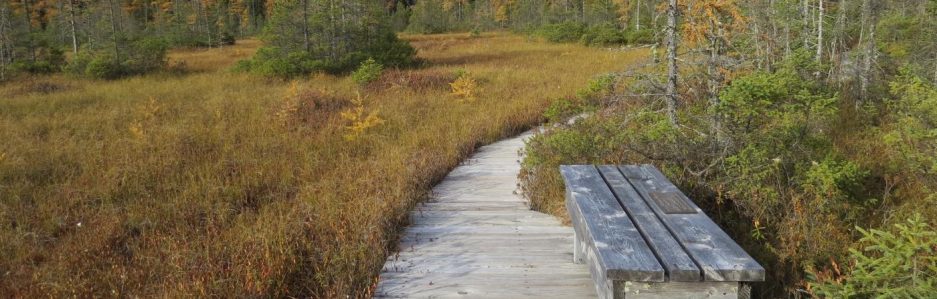
If you concentrate during those times you’re alone on the trail, you can almost fool yourself into thinking that nothing has changed.
All alone on the back side of the lake, you can close your eyes and take in the perfume of wet earth and newly sprouted grass. You can, if only briefly, mute your own thoughts and meditate to the dry rustle of a spring breeze through the husks of last year’s prairie grass. Or the gentle lap of the lake against its rock-lined shores. To the whistle and trill of birds seeking to beget a new generation. It’s spring again, you tell yourself. It’s spring again, just like last year and the years before.
You can even pretend with your eyes wide open, for short stretches when no one else is on the trail. You can take in the sights of nature beginning anew. Of gray winter skies and the steel-colored ice that had paved the lake giving way to brilliant blues, signaling Earth’s annual rebirth. But inevitably, your eyes are going to belie the facade of life as usual. They’ll note the odd absence of people on the trail, given that it’s a beautiful spring day. They will observe in that cerulean sky the conspicuous absence of tell-tale contrails of jetliners moving people from one place to the other. Just like 9/11, you think. Just like that gorgeous September day — not a cloud in the sky — when it seemed the world had stopped turning.
Eventually, you’re going to run into other people who, like you, are stretching their legs and escaping their own quarantine. And then you’ll remember. You’ll remember as you both ease to opposite edges of the 8-foot-wide concrete trail in an effort to stay as far from each other as possible. You’ll remember as you nod your greeting instead of verbalizing it, because you wouldn’t want to send a deadly virus in that stranger’s direction if, by chance, you have it. You’ll remember your anxiety that you could have such a deadly virus lurking in you because you dared venture to the store earlier this week for the groceries you need. You’ll remember that this person 6 to 8 feet from you could also be carrying a deadly virus, and might be worried about carrying it home to a spouse or children or parents. You’ll remember.
I had planned on posting an amusing bit today on my two weeks of self-quarantine, in which I kept a daily journal. It was funny. Or, at least, I thought it was. But I can’t seem to work up to funny today. Too much has happened since yesterday. I’ve read too many posts from friends who are nurses and doctors on the front lines and going into battle woefully under-protected from an invisible foe, who have seen enough death in the last week to last them a lifetime, but who are bracing for that death to double several-fold over the coming weeks.
It’s so bad in New York, now the epicenter of the pandemic, that bodies are being loaded into refrigerated trailers serving as make-shift morgues. Triage tents have been set up in Central Park — a reality not seen since the bloodbath of the American Civil War.
The White House acknowledged yesterday that somewhere around 250,000 people in the U.S. could die from the virus — if we do a halfway decent job of staying away from each other. The projections if don’t do a good job are four to eight times that number.
A quarter-million people means you or someone you know is going to die from this pathogen; 250,000 moves the new coronavirus from something that didn’t exist a year ago to the third-leading cause of death in 2020, behind heart disease and cancer. It is more than the number of deaths per year from flu, accidents and homicides, combined. And it doesn’t take into account those people who will die from other maladies untreated — from uncaught cancers to mental illness leading to suicide — as health care workers struggle to both contain this new virus and lose scores of their own in the fight. That many deaths, were it meted out equally, comes to 5,000 deaths in your state. A quarter-million people is a whole new ballgame.
A day later — on April Fools’ Day, no less — we learned that the Chinese government appears to have low-balled its own coronavirus numbers, both of cases and deaths. That takes away some hope that had been built on what appeared to be China’s containment of the virus. Ha! Gotcha, rest of the world!
While the grown-ups have been playing at pretending all is OK, other members of our families are not so discreet. The dogs openly display their confusion on the trail, as they happily rush up to strangers — as dogs are wont to do — for a pat on the head or scruff behind the ear, only to endure a harsh, “NO!” and jerk of the leash. Dogs don’t understand the plague or social distancing or fatality ratios. What they know is that, until recently, there was nothing wrong with a friendly greeting of other people on the trail.
Young children have the same problem, but can at least verbalize their confusion, which only serves to enhance the surreal circumstances of our current reality.
I had almost finished my recent walk when a girl of about 4 toddled briefly from her family toward me with what looked to be a paper flower in her outstretched hand. I froze, as my desire not to hurt the little girl’s feelings clashed with my understanding that it would be the height of irresponsibility to take something from her hand.
Luckily, her dad intervened.
“Emma, no,” he said. “Remember, we talked about this. We have to stay away from other people, so we don’t get sick.”
The girl stopped and gave me a once over, before turning back to her dad.
“But she looks nice,” the girl protested.
Nervous laughter all around.
“I’m sure she is nice,” the dad said. “But germs don’t care who’s nice. Germs make even nice people sick.”
Indeed, they do. Nice people and jerks; the beautiful and the ugly; intellectuals and fools, alike. We’re all in this together, even as we remain at least 6 feet apart.

 Plain Water and Trail Mix