My observations these days are coming about half a mile up the hill from the lake — the bit of it I can see from my front yard. Like many of you, I’m keeping my distance in the hopes of both not contracting and not spreading a particularly nasty virus.
As part of my job over the last month (has it only been a month? It seems so much longer), I’ve had to brush up on viruses and pandemics and the efforts to combat them. I know that the new coronavirus originated in animals — likely bats or an Asian armadillo-like creature called a pangolin — and at some point last year jumped to humans. It quickly adapted to spread from human to human, and some studies show it continues to morph into deadlier strains. Scientists have a word for this type of virus: slippery.
How apropos. Slippery. It so perfectly captures not only the mutating virus, but the unsure footing of our society, our economy, even our liberties, as we scramble to stop the spread.
I’d hazard a guess that most of us until this month have taken for granted the ability to browse a fully-stocked grocery store at our convenience. Or drop into a restaurant for a bite, our most pressing concern being whether we wanted burgers, Tex-Mex, Italian or fare from an endless array of ethnic offerings.
Now, many of those shelves are bare. The restaurants are closed or offering only take-out. We find ourselves essentially on lockdown, with a domino succession of states and cities issuing stay-at-home orders as officials desperately try to get a handle on a pandemic that has already slipped out of their control. On March 1, there were 75 confirmed cases in the United States, most of them on the West Coast. Today, there are some 34,000 cases across the country and 500 deaths, and those numbers are expected to grow exponentially over the coming days, maybe weeks. The World Health Organization says 20% of those who contract the virus will need to be hospitalized. Projections suggest our hospitals will become overwhelmed if we can’t slow the spread by staying away from each other.
I’m all in on self-isolation. I was asked last week to stay in my home and monitor for symptoms after possibly being exposed two weeks ago. The monitoring was to last a week, but I know I’m in for a longer haul, as are we all.
I’m lucky; I can work from home. I’m also lucky in that I live alone — just me and the dog. No one in; no one out. No one to inadvertently bring home the pathogen from the store or office or elsewhere. No one to bother me as I work. No one to else to feed. No one else with whom to discuss the world’s current events. No one else to watch television with. No one else to share a meal with. No one else. No one. No. One.
It’s Day 7, and I’m not at all convinced that the deafening silence of my isolation is any less unhinging than the noisy chaos of a tightly-packed house under quarantine. I say that knowing the mother of four down the street reading this would like to raise a point of order.
We may all, over the coming weeks, find ourselves slipping into madness somewhere between tedium and terror.
But as dire as slippery can seem, it’s a far cry from collapsed.
I’m not making light of the predicament we’re in. We are more than just inconvenienced. It’s hard to find staples, from bread to toilet paper. Our children are losing nearly half a year of school. Our medical needs are being put on the back burner as health care workers scramble to triage an outbreak. A lot of us have lost our jobs. Some of us are facing losing our livelihoods. Very slippery stuff.
On the other hand, we have running water. The power is still on. Our societal infrastructure remains largely intact. We’re still streaming Netflix, for heaven’s sake.
I have a childhood friend who was living on the Mississippi Gulf Coast when an enraged Hurricane Katrina came screaming over the shore. It wiped homes, schools and businesses off their foundations, wrecked the power grid and cut off all modern means of communication. Power and phone service were down more than a month in some places. More than 200 Mississippians died in the storm; 67 people were never found.
My friend’s house was among those that survived the winds and storm surge, though it took a beating along with the rest of the property. She and her husband ran a horse farm at the time, and their immediate concerns were to save the horses they could (some didn’t make it) and fix the fences and shelters to keep the animals safe.
But the need for food, potable water and other essentials soon loomed large. It wasn’t as simple as going to the store; stores were destroyed or unable to take business because there was no power to run the machines. Your credit card was useless. No cash; no goods. Looters turned out in droves, first at stores, then when those ran dry, other people’s homes. With no phones, there was no calling 911 for help. Even if you could, there was often no one to reach. Many emergency responders had abandoned their posts either to flee the devastation or to protect their own families from the lawlessness that overtook those ravaged communities.
It took only days for civilized society to break down into something apocalyptic.
My friend described an existence over the coming weeks that sounded like something your would read in a horror novel. To protect the house against looters, she and her husband took turns keeping watch at night from the front porch with a small arsenal. So they each got to sleep only every other night. For weeks.
Without power, there was no way to pump fuel needed to keep the generators and farm implements running. Luckily, her dad owned a farm 300 miles north and would fill a tanker on the back of a truck to drive down. But the trip required additional men for when the truck crossed over into what my friend and her neighbors called “The Zone” — a line in the sand where civilization ended and anarchy ruled. Once the truck reached The Zone, the farmhands would take up posts hanging from the outside of the tank with rifles slung over their shoulders. This was to protect precious cargo — literally a tank of gas — from armed hijackers.
My friend recalled this Wild West existence as she pushed green beans around on a plate at a high school reunion dinner, with no more disquietude than if she were recounting her kid’s softball game. Conversely, I’m certain my lower jaw rested on the table as I listened in open-mouthed horror.
“To this day, I feel uneasy going to the grocery store without a sidearm,” she said matter-of-factly, while wearing a cocktail dress and sipping a nice pinot grigio. This was two years after Katrina.
I’ve thought of this exchange a lot in the last week, as this slippery virus puts our lives on a slippery slope of upended routines and financial uncertainty. It’s dicey, yes. But not destroyed. Barring something unforeseen, there is no Thunderdome in our future.
What I’ve seen from the seat at my front window is a good dose of patience. I’ve seen inventive minds working to provide needed supplies to the front lines of those fighting the pandemic. I see neighbors helping neighbors. I see people taking action to look out for those who have no loved ones nearby — that includes friends who’ve checked in with me daily.
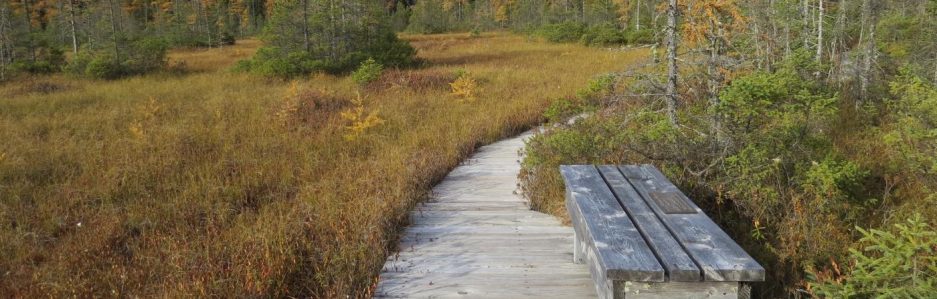
And I can still see the lake shimmering in the distance and look forward to soon pondering these times along its winding trail. Stay safe and keep your footing, friends. It’s slippery out there.


 Plain Water and Trail Mix
I always love reading your point of view on “everyday” life. And I agree that our life today is like nothing we ever expected, but we must stay thankful to a gracious God who loves us. And it’s wonderful to witness and read about loving people trying to take care of others in need during this time. I suppose it is all too true that slippery times bring out the best and worst in people and our civilization.
LikeLike
It’s good that those folks had will and the weapons to preserve their lives and home .too many people have neither , as an old veteran I still have both the will and the arms.
LikeLike