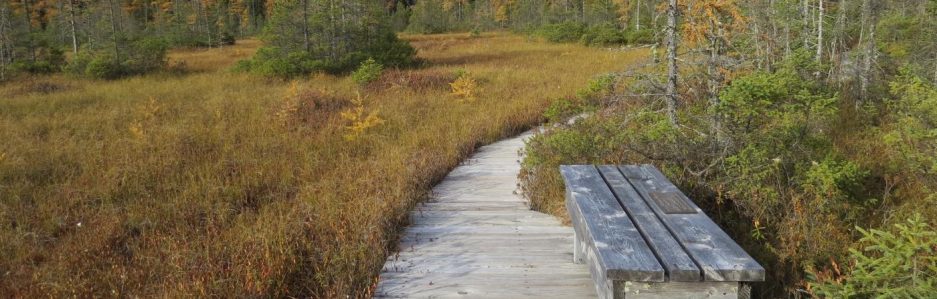
On the Waterfront

I chickened out on my first trip to the water.

The stink of polyvinyl hung heavy in the minivan, thanks to the inflatable kayak crammed into it, with the vessel’s nose squeezed between the two front bucket seats and blocking much of my view. I had bought the blow-up kayak on sale after learning that the much-anticipated lake to the north would be opening that week. I inflated the thing in my living room to test that it didn’t have a leak. After being assured it did not, I dragged it through the house, awkwardly navigating it through two doors and into the garage and shoving it into the hatchback end of the van. I mean, it was already inflated. I didn’t see the point of deflating it only to re-inflate it three minutes later at the lake.

I opted for the inflatable raft over a hard-shell kayak because 1.) It was cheaper; 2.) I didn’t know how to strap a kayak to the roof of the van; and 3.) I wanted to test the water, so to speak, to see if I’d actually use it on a regular basis before committing a chunk of the garage to a 10 foot span of plastic. This way, if I never went kayaking again, I could stuff the deflated thing back in its 3’x2’ box and be done with it.

But here I was, slowly circling the parking lot, chagrined at the sight of others’ fancy kayak trailers and rooftop racks, hoping they couldn’t see the glorified pool float squeezed inside my vehicle. They’d know soon enough when I pulled it out, circus clown style. 

Then there was the question of where and how to actually get it in the lake, and how to get myself into it without flipping over into the water. And was I dressed properly? What does one wear to kayak on a warm summer’s day? A wetsuit with aqua shoes seemed too aggressive for a casual outing in what was essentially a pond. A bathing suit felt too immodest. I settled on capri cargo khakis with a T-shirt and flip-flops. Everyone else who’d come out to paddle the new water was already in, and I couldn’t tell what they were wearing.

The new lake opened in June, some 10 years after it was first proposed. All in all, I would think a decade from concept to paddling a canoe is a pretty quick turnaround, given that nature tends to take at least a few thousand years. Still, it felt like an eternity.

That may be because I moved into the neighborhood nearly a dozen years ago on the promise that the developer would be building a neighborhood pool. 

“Next summer, it’ll be open,” the real estate agent had assured, more than once. It was fall, and the coming winter promised to be brutal. I’d spent that summer juggling work, the kids’ activities and helping remodel my current home’s basement. The prospect of spending the next summer lounging by the pool, catching up on my reading while the kids splashed their way to an early bedtime was a seduction I could not resist.

But unbeknownst to me, my plunge into the next step beyond starter home corresponded with the largest housing market collapse in U.S. history. No pool _ not even a hint of pool construction _ was forthcoming the next summer. There also seemed to be no construction of new homes. Not only did the dozen or so of us who’d bought homes in the fledgling neighborhood not have a pool, we had no new neighbors. For years to come.

Turns out, the developer likely knew _ even by the time we were being sold a bill of goods _ that no pool was set for construction for the next summer. By the summer after that, the developer was well aware there would be no pool at all, but the few neighbors we acquired said agents desperate for a sale had peddled the lie to them that the pool was on the books. There was more than a little anger and angst over this once the con was up. There was talk of a lawsuit and questions about what had been done with years of inflated neighborhood association dues that were supposed to be going into a pool fund. But then came word of the lake, and we all had something bigger and potentially better to distract us.

And now, here I was, hanging in my van and fretting over how to get in the water.

With all this pent-up snobbery over eastern Nebraska’s lack of big water, you’d think I would have no problem getting onto a lake I initially  dubbed “The Duck Pond.” But after circling the lot about three times, I pulled out and went back home.

I left under the guise of needing to get a towel or two to dry off from the soaking I would inevitably get. At least, that’s what I told myself. Plus, it was too crowded at high noon on a Sunday. I loitered at home most of the afternoon.

By the time I worked up the courage to head back, there was still about three hours of daylight left, and the crowd had thinned a bit. I took a deep breath, hauled the inflatable raft out of the van and dragged it to the boat launch. I eased in, used the paddle to push off, and just like that, I was kayaking. I looked around. No one was staring. No one was pointing and laughing at my pool-float of a kayak. No one seemed to be paying attention to my venture at all.

I paddled to the center of the shallow lake, where the crowns of cottonwoods and willows that had lined the original, now-dammed creek rose up from the water’s surface. I’d stop every now and then to take photos with my phone, but otherwise paddled straight through to the far side of the lake until my arms ached _ apparently forgetting that I’d have to paddle back just as far. By the time I returned to the boat launch, my arms and back were as weak and useless as jelly. But I felt alive and accomplished, having made my first solo kayaking trip. Why had I spent even a second worrying that I might look foolish getting into the water?

Then came time to get out of the water.

I slid the inflatable kayak front first up the ramp until the vinyl bottom under me gripped the concrete, coming to a hard stop. Easy-peasy, I thought. I’ll just swing my legs over the side and stand up. It appears I had left some things out of my calculation. Like the fact that I was almost 50. And that I hadn’t attempted a stand-from-a-bottom-on-the-ground move in probably 30 years. And gravity.

I willed myself to stand. I went nowhere. I put a hand under me while holding the paddle in front of me to leverage myself up. I made it about three inches before falling back into the rubber kayak. I tossed the paddle to the bank and put both hands under me to try to push myself up. Still a no-go. After a few pathetic minutes, I had decided my only option was to sit in the thing for several hours until every living soul had left, then roll myself out of the kayak, into the water and crawl my way up the ramp _ when I heard a voice say, “Here; let me give you a hand.”

It was my next-door neighbor, who’s probably about 20 years younger and 30 pounds lighter than me and can definitely stand up from a seated position in a floating kayak. I know this because he had just gotten out of a kayak on the other side of the ramp.

I was past grappling with defeat and awkwardness. I just took the hand he had mercifully reached out, and _ voila! _ I was on my feet. Ten minutes earlier I had felt as outdoorsy and capable as Bear Grylls. Now, I felt like the poster geezer for Life Alert.

Was I embarrassed? You bet. Did it kill me? It did not. Again; no one seemed to care that the old lady in the pool-float kayak needed a hand to get out of it. And I’ve since made some adjustments to avoid a repeat _ like docking on the ramp stern-first to get further on solid ground and more leverage. Wearing shorts, instead of capris, that won’t drag in the water as I get out. And doing some squats every once in a while to build at least a modicum of strength.

I’ve been in the water about a half-dozen times now, still using the inflatable canoe. It’s become one of my favorite pastimes. I’ll likely graduate to a real kayak this year, and install a roof rack to carry it.

I’m glad I didn’t let the fear of looking foolish keep me from trying something new. I’m going to try to remember that when I get on a bike for the first time in a couple of decades later this summer.

On Your Left

There are two kinds of people who use the trail around the lake: the two-footed kind and the two-wheeled kind.

Sure; there’s the occasional rollerblader, but they’re so rare, it’d be impossible to give them their own column. They’re the .03 percent who check “other.” Everyone else on the path is either a walker/jogger or a bicyclist.

Just as with seemingly every other facet of life these days, there’s a sort of tribalism that pits the walkers against the bicyclists on the trail. I mean, we all keep it polite; nod and say our good mornings when we pass each other face-to-face. Most of us, on both sides, fall into a pretty benign category: those, like me, whose hike resembles more of a stroll, and those bicyclists just out to enjoy the weather or traveling in family packs _ mom and dad and a couple of young kids in tow _ moving not much faster than the joggers. 

Then there are the Serious Cyclists. They’re discernible from the rest of us by their spandex body suits, aerodynamic alien-shaped helmets and thin-tired, curled handled bikes. Oh, and their tendency to scream around others on the trail at a blistering speed in their perpetual quest to top last week’s time. The Serious Cyclists are annoyed with walkers and joggers, who could possibly slow what would otherwise surely be the cyclist’s Best Time Ever. Walkers and joggers are equally annoyed by the Serious Cyclist’s sense of entitlement to the trail.

Still _ we keep it civil. But there’s a wariness beneath the surface of our civility. It’s a tacit antipathy born, I suppose, of the very real possibility of someone from either group ending up in a body cast if coexistence on an 8-foot wide path of concrete breaks down.

To keep that from happening, there are rules that must be followed. The rules are posted at various intervals on the trail, reminding walkers to keep to the right side of the path and bicyclists to “announce your presence.”

It seems to me that if I were a cyclist _ which, I want to make clear, I am not _ I would take some liberties with this rule.  You know; have some fun with it. 

“Hear ye; hear ye!” I might shout. “A cyclist doth approach!”

I mean, that’s an announcement.

Alas, I’ve concluded that cyclists have no sense of humor or even whimsy. Because they all announce themselves the same way as they sneak up behind you traveling anywhere from 10 to 30 mph.

“On your left.”

There’s no variation. No mixing it up. No adding a “Good morning” or “Nice day.” Not even throwing an emphasis on one of the words, like “On YOUR left.” 

It’s always just the flat, even pronouncement uttered at least a dozen times on every trip around the lake. An incantation delivered with all the urgency and passion of habit.

“On your left.”

It’s all I can do not to respond, “And also with you.” Or, “Under His eye.”

But I don’t want to be the Trail Kook. So I keep my annoyance and my smart-aleck comments to myself and plod along with a simple nod of acknowledgment.

On a recent trip around the trail, I was stunned to be warned of an approaching cyclist not with the irksome chant, but by someone ringing a bicycle bell. A bell!

It’s the equivalent of snapping one’s fingers or whistling to get a minion’s attention. As though the person whose attention you seek is not a person, but a dog or some animal to be trained. It’s a proclamation that the cyclist now can’t even be bothered with the effort of having to voice his approach.

And then it happened again. And again. And now, a good quarter of the cyclists are delivering their warnings via bell ringing.

There’s no way to even respond to a bell being rung at you.

Are the demands of civility so onerous that we can no longer be burdened to speak to one another? Must our differences mean that common courtesy takes a back seat to expediency? Does indecency know no bounds?

The audacity! The gall! Oh, the humanity! 

I mean, whatever happened to “on your left”?

A Lake by Any Other Name …

I made my way out to the lake this morning _ the new one that opened last summer less than a half-mile walk from my house. It had been at least three weeks since my last trip to the water, back when the temperature broke 60 in Omaha for the first time in almost six months. Six months. The entire month of February never got above freezing. No place in the contiguous United States should be so cursed. 

The lake was still frozen and gray on that first outing, despite the brief spring temp, and the landscape around it brown and lifeless. Whatever. My neighbors and I had tired of huddling in our homes for months on end, and it seemed we all had the same notion to head outside and catch even the briefest warm-up in what has easily been the most miserable winter of my more than 20 years in Nebraska.

But if that venture represented hope, today’s outing was an affirmation. It was the third consecutive day the temperature had eclipsed 70 degrees, and despite a forecasted snowstorm later in the week, people were throwing caution to the wind. They weren’t just out in T-shirts and flip flops. They had set up badminton nets and hauled out lawn chairs and patio umbrellas. Fire pits and smokers were dragged from the black depths of the garage, and friends and family were invited over for barbecue. Yards were being fertilized and cleaned of winter debris.

I mean, no one had broken out the gardening gloves or anything. We’re optimistic, not crazy. But all in all, the outdoor buzz was the surest sign that winter might finally be packing up for the year.

The hike around the lake only bolstered that conclusion. The iced-over surface had melted, and the lake in the late afternoon sun gleamed like a sapphire. The surrounding fields were tinged with spring green; the trees had sprouted buds.

As a Mississippi Delta transplant to the big open plains of Nebraska, I was surprised at how familiar my new home seemed when I first arrived. I had expected the culture shock to be loud and conspicuous, but there were more similarities than differences. The Delta is largely a flat, cultivated plain. So is much of Nebraska. The people in both places are friendly and engaging. People in my home state talk funny. People in Nebraska say things like “worsh” the dishes, and “Don” and “Dawn” sound exactly _ and confusingly _ the same, so don’t kid yourselves that Nebraskans have no accent.

But there were differences. I made the move in late July, and found Nebraska summers to be most pleasant. At least, compared to midsummer in Mississippi, where the heat and humidity and insects the size of your head could easily give the Amazon rainforest a run for its money. In Nebraska, you can take a long walk after dinner in the thick of summer and enjoy the relatively cool night air and sight of fireflies (or “lightning bugs” in Mississippi-speak) along a manicured trail without catching even a faint buzz of a mosquito.

As pleasant as I found the climate, I found the water on the Plains _ or lack, thereof _ disappointing. In Mississippi, I was used to spending warm days on the lake _ mostly Lake Whittington, a small oxbow of 2,300 surface acres created by the shifting course of the Mississippi River. Thanks to friends with cabins and my own family’s large pontoon boat, I spent whole summers of my childhood on that lake. A short drive away was the larger man-made Grenada Lake, which is about the size of Nebraska’s largest reservoir, Lake McConaughy in western Nebraska. Lake McConaugh is at least a five-hour drive from Omaha. A drive that far in Mississippi could get me to the Gulf Coast and some real water. There’s no driving to any coast within a day of Omaha.

While I went into the move fully aware there would be no day trips to the beach, I was unprepared for Omaha’s dearth of any real lakes. A few weeks in, when new friends invited me to “the lake,” my joy turned to confusion as I found myself not at a lake, but a patch of water that would barely qualify as a pond. There would be no speed boating or water skiing. No wake boarding or tubing. No three-decker party barge.

I soon learned that “lake” in the plains of eastern Nebraska usually means an excavated sand pit filled with water that has a no-wake rule and can accommodate little more than a paddle boat. Builders scramble to crowd as many homes around the water’s edge as they can, and the disparity in the size of the homes to the puny outline of the water sometimes borders on ridiculous, becoming a kind of clown car of waterfront real estate.

The action on these ponds happens on the shore, where about 15 feet of sand plays host to bonfires, grills, some Adirondack chairs and maybe a volleyball net. “Lake” is simply a colloquialism, much the same way Nebraskans casually toss out that a boss or spouse “yelled” at them over a minor offense. Early on, I’d reply with an incredulous, “They yelled at you?” It took me years to figure out that no one was actually yelling. “Yelling,” in fact, is synonymous with “admonishing” in Nebraska. Like “lake” is synonymous with “any body of water larger than a kiddie pool.”

It’s funny how one’s perspective can change. What’s so foreign in the beginning of a journey becomes routine, given enough years. Weird + time = normal.

I used to laugh at the locals who complained about how hot and humid the Nebraska summers are. Now, I gripe right along with them whenever the mercury climbs above 80. I would roll my eyes at the idea of taking out an obscene mortgage to live in a house that would easily list for $100,000 less anywhere else, but for the puddle of water behind it. Now, I find myself calculating whether I could afford the cost of building a house on the lake abutting my neighborhood.

I’ve fallen in love with that lake. And, yes, I call it “the lake,” just like everyone else. No, there won’t be any skiing or party barges. But I’ve found a new passion for kayaking around its 220 acres. I find myself identifying the various flora around it: thistle, milkweed, morning glory, foxtail, black-eyed Susans and compass plant, goldenrod, wild parsnip, various prairie grasses. I’m probably wrong about half of them, but it’s fun to try.

There’s also a five-mile hiking and biking trail around its rock-lined shores where I inevitably run into neighbors enjoying their own outings, strangers doing some pretty strange things and all manner of wildlife making a home of this newly-minted sluice.

I hope to spend many more days enjoying this water on the Plains and the trail that meanders around it, and documenting some of the experiences and thoughts I have there along the way. Thus, the title of this site. I hope you enjoy it with me.